College Enrollments: Analyzing Demographics and Future Trends
Understanding college enrollments is vital for educators, policymakers, and students navigating the complex landscape of higher education. This comprehensive guide provides a deep dive into the latest enrollment statistics, helping you make sense of demographic shifts, financial impacts, and institutional growth trajectories. By analyzing these evolving trends, stakeholders can better prepare for the future of academic institutions, ensuring that resources are allocated efficiently and student needs are met effectively in an ever-changing world.
Recent Shifts in Higher Education Demographics
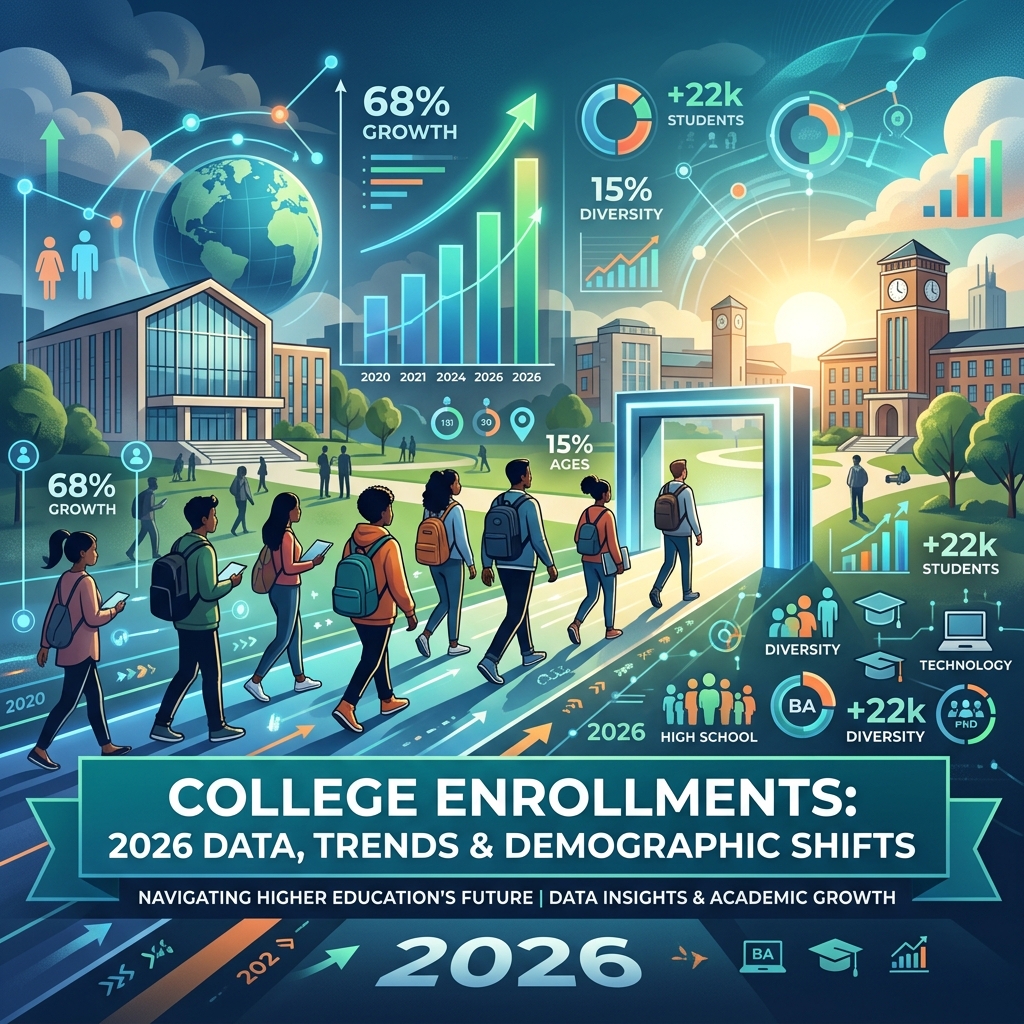
In recent years, higher education has experienced significant changes in student demographics. As adult learners return to school to upskill and international student numbers fluctuate due to geopolitical factors, universities are adapting their recruitment strategies. The current landscape highlights an increased demand for flexible online programs alongside traditional on-campus experiences. Analyzing these shifts is crucial for ensuring equal access, fostering diversity, and supporting the success of all student populations across the globe.
Institutions are increasingly relying on data-driven approaches to predict future enrollment numbers, optimizing financial aid distribution, and tailoring academic support services. The integration of advanced predictive analytics helps colleges maintain robust enrollment figures despite economic challenges and shifting societal expectations. Recognizing these demographic transformations enables universities to build more inclusive communities and offer targeted support systems that address the unique challenges faced by first-generation and non-traditional students.
Impact of Economic Factors on College Admissions
Economic stability plays a massive role in college admissions. During economic downturns, individuals often seek further education to improve their career prospects, leading to sudden surges in community college and vocational training enrollments. Conversely, a booming job market might see a slight dip in immediate post-secondary transitions as high school graduates enter the workforce directly to take advantage of lucrative entry-level opportunities.
Furthermore, the rising cost of tuition continues to be a primary concern for prospective students and their families. Navigating the intricate web of financial aid, merit-based scholarships, and federal student loans is an integral part of the enrollment journey. Colleges that offer transparent pricing models and robust financial support networks tend to maintain steadier enrollment numbers and higher student retention rates. Financial literacy programs integrated into the admissions process also empower students to make informed decisions regarding their educational investments.
Technological Advancements in the Admissions Process
The modernization of the admissions process has significantly impacted college enrollments. Virtual campus tours, AI-driven chatbots answering prospective student inquiries, and streamlined digital application portals have made applying to college more accessible than ever. These technological innovations reduce friction in the application pipeline, encouraging a higher volume of diverse applicants.
Moreover, predictive modeling allows enrollment managers to identify at-risk applicants and intervene proactively, improving yield rates. By leveraging big data, institutions can personalize their outreach efforts, ensuring that prospective students receive relevant information about academic programs, extracurricular activities, and campus life that aligns with their specific interests and career aspirations.
Future Outlook for University Enrollments
Looking ahead, the future of university enrollments will likely be shaped by continuous technological advancements and rapidly evolving workforce needs. The massive expansion of artificial intelligence, applied data science, and sustainable renewable energy sectors demands highly specialized degree programs. As a result, academic institutions must continuously update and refine their curricula to attract forward-thinking students who are eager to lead in the industries of tomorrow.
Additionally, the concept of lifelong learning is fundamentally transforming how colleges view their alumni networks. Continuous education, certificate programs, and micro-credentialing are rapidly becoming standard offerings, ensuring that universities remain highly relevant throughout a professional's entire career arc. The traditional four-year degree model is being augmented by modular, stackable credentials that allow learners to adapt to changing market conditions with agility.
Frequently Asked Questions (FAQ)
What are the primary factors that influence college enrollment rates?
Key factors influencing college enrollment rates include macroeconomic conditions, rising tuition costs, major demographic shifts, and the availability of comprehensive financial aid packages. Additionally, the perceived return on investment for specific degrees heavily sways prospective students' decisions.
How are modern universities adapting to demographic changes?
Universities are actively adapting by increasing their online and hybrid course offerings, developing highly specialized programs tailored for adult learners, and utilizing advanced data analytics for highly targeted and personalized recruitment campaigns.
Will online and hybrid enrollments continue to grow in the future?
Yes, the unparalleled flexibility, accessibility, and cost-effectiveness of online education strongly suggest that it will remain a significant and rapidly growing component of overall college enrollments for the foreseeable future, particularly for non-traditional students.